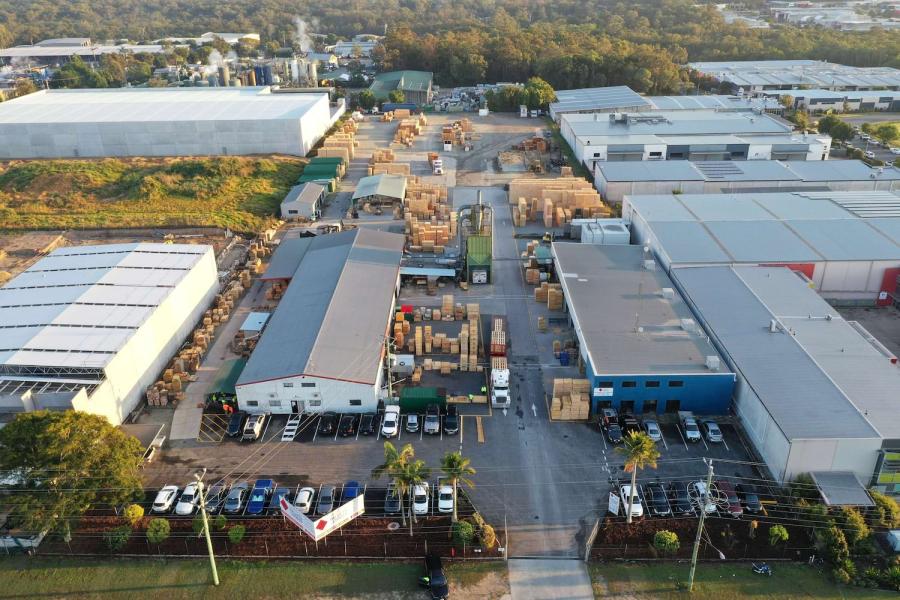
James Jones & Sons Ltd is a family owned and managed forest products company, operating from 25 locations strategically located across the UK.
Three people from different areas of the business attended Fit4Works Manual Handling Train the Trainer Course, delivered online via Zoom.
All three trainees had experience in manual handling training but they wanted to ensure that they were delivering the same high standard to employees across the whole company.
The training session was designed to be interactive, practical, and grounded in real-world application. The following subject areas were included:
Understanding Why Handling Risks Must Be Managed - Participants began by noting their thoughts in the training manual before engaging in a group discussion around the reasons manual handling risks need to be carefully controlled.
Legislation and Legal Duties - A short video introduced the relevant legislation, followed by a guided discussion to highlight key responsibilities and compliance requirements.
Health and Safety Statistics - The group reviewed and explored recent figures published by the Health and Safety Executive, particularly those relating to musculoskeletal injuries in the workplace.
Anatomy and the Spine - Using a model of the human spine, the trainer explained correct spinal alignment, how it is compromised under strain, and the potential consequences such as arthritis and disc prolapse.
Lever Mechanics - Through a PowerPoint demonstration, the trainer illustrated how small changes in load position - particularly holding weight too far from the body — can dramatically increase strain on the lower back.
Principles of Efficient Movement - Each principle of safe and efficient movement was explained and demonstrated, with opportunities for participants to observe and ask questions.
Core Stability: The Body’s Natural Support Belt - The importance of activating and maintaining core stability muscles during manual handling was explained to show how they act as a protective “belt” for the spine.
Practical Handling Demonstrations - The trainer demonstrated how to organise and deliver an effective manual handling practice session, providing participants with a clear structure to follow.
Back Care and Preventative Exercises - Practical techniques and exercises were introduced to help reduce the risk of lower back pain and support long-term spinal health.
Conducting Risk Assessments - Using video scenarios, trainees carried out their own assessments based on the TILE method (Task, Individual, Load, Environment).
Knowledge Check: End-of-Course Quiz - At the end of the session, participants completed a short quiz and self-marked their answers to consolidate their learning.
Course Design and Planning - A collaborative discussion explored how to design an effective training course — including selecting topics, determining group size, and setting appropriate session length.
Lesson Planning - Participants were guided through the process of constructing a structured and well-organised lesson plan.
Learning Styles and Delivery - Through an interactive exercise, the group explored the value of tailoring training to different learning preferences - visual, reading/writing, auditory, and kinesthetic.
Tips for Effective Training - The session concluded with a conversation on what distinguishes an excellent trainer, covering both personal delivery skills and practical classroom techniques.