First Direct Arena
Case Study Overview
Training Course Delivered
Industry sector
Location
Training Carried Out

Case Study Details
Angela, the director of Fit4Work, possesses extensive experience as a Health and Safety Trainer and a Chartered Physiotherapist. She has worked with some of the UK’s largest and most prestigious companies, providing training that has greatly influenced safety and culture.
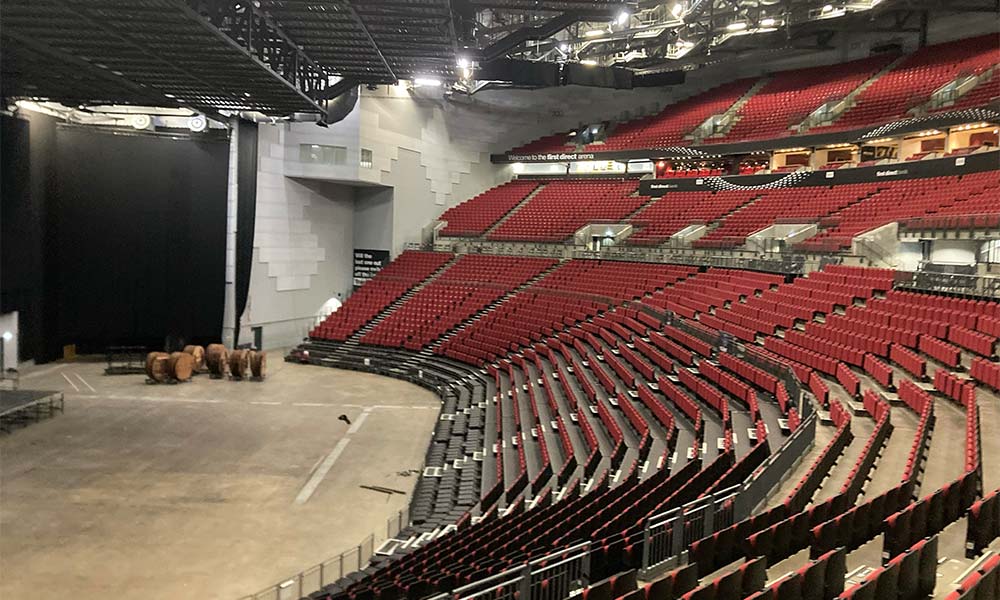
On 10th September 2024, the First Direct Arena in Leeds sought assistance from Angela Hinton, the Director of Fit4Work, to deliver the IOSH Approved Manual Handling Train-the-Trainer Course to eight individuals. The delegates represented specific departments within the organisation: Cleaning Services, Food and Beverages, Stage Building, and Maintenance. As each department faced different training challenges, including various handling tasks, Angela customised the practical session to address their specific needs. Consequently, two distinct lesson plans had to be created: one focused on heavy lifting, which included the use of handling aids, while the other dealt with simpler load handling. Given the delegates' diverse past experiences from their job roles, the group exhibited a mix of skills that everyone could benefit from.
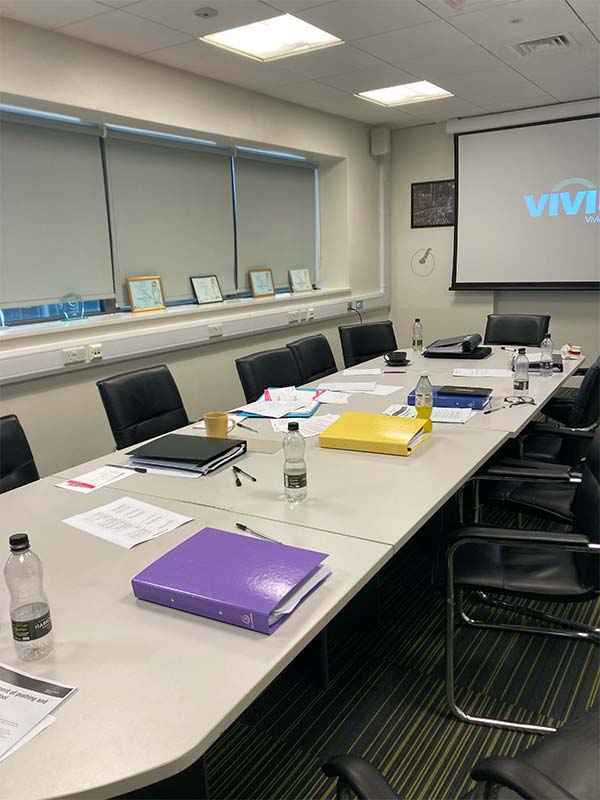
This course requires delegates to complete three end-of-course assessments: deliver a 10-minute PowerPoint presentation, submit a theory assessment paper with a sixty per cent pass mark, and participate in a practical session conducted as though they were teaching their employees how to handle loads at work.
The first day of the course focused on theoretical aspects, yet it was far from passive. As a 'train the trainer' course, the delegates were actively engaged. To help them prepare a lesson plan for their future training, Angela encouraged them to consider and discuss their ideas on which topics should be included in their moving and handling training, the ideal duration of the training, and the intended audience. They were informed that these topics would be revisited at the end of the course to evaluate any changes in their perspectives. Towards the end of the course, additional issues that the delegates found particularly valuable were introduced, such as reasons for managing risks, a quiz, anatomy, and principles of efficient movement.
The training took a practical turn on the second day as we visited each department to tackle specific handling issues. This hands-on approach enabled us to apply the theoretical knowledge from the first day to real-world situations, ensuring the training was informative and directly relevant to the delegates' work.
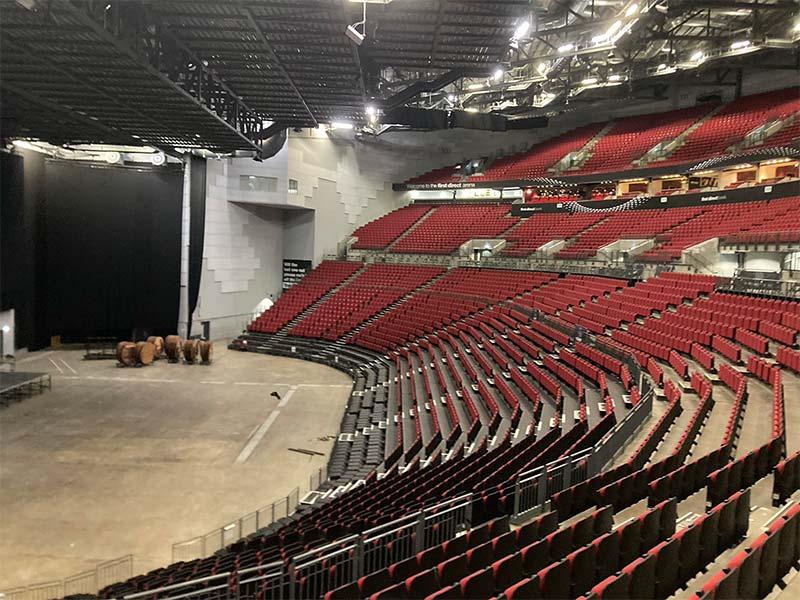
In the arena, we discussed the safe transfer and erection of very heavy railings. It was concluded that automated machinery to move these items could only guarantee a reduction in risk to the employees involved. Angela advised the trainees on the course who handled the railings to conduct a specific risk assessment and relay the findings to higher management to justify the purchase of equipment to perform this task.
We examined the handling of beer kegs in the food and beverage department. Mo, the food and beverage manager, demonstrated the process flawlessly. The keg was tipped onto its side and lowered onto a crash mat before being rolled to its final destination.
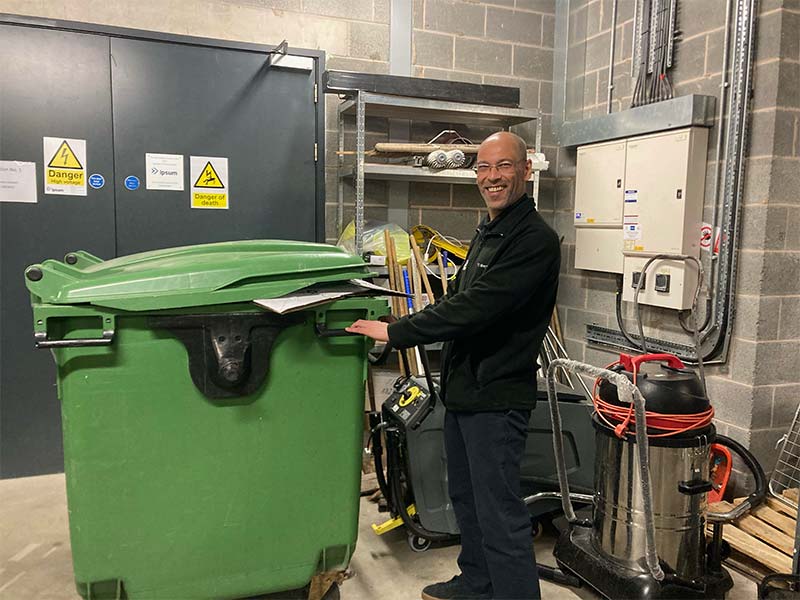
The cleaning department manager, Vin, described how the floors and areas under the seats were swept. The management of this task was commendable as it focused on minimising back strain from the repetitive nature of the job. However, he reported that back strain could occur when moving the large green bins (illustrated at the side) along a corridor with a slight incline, creating tension in his lower back while he worked, trying to stop them from rolling sideways. To address this, Angela suggested that a second person walk alongside the bin (on the side of the incline) and assist by pushing it forward in a straight line.
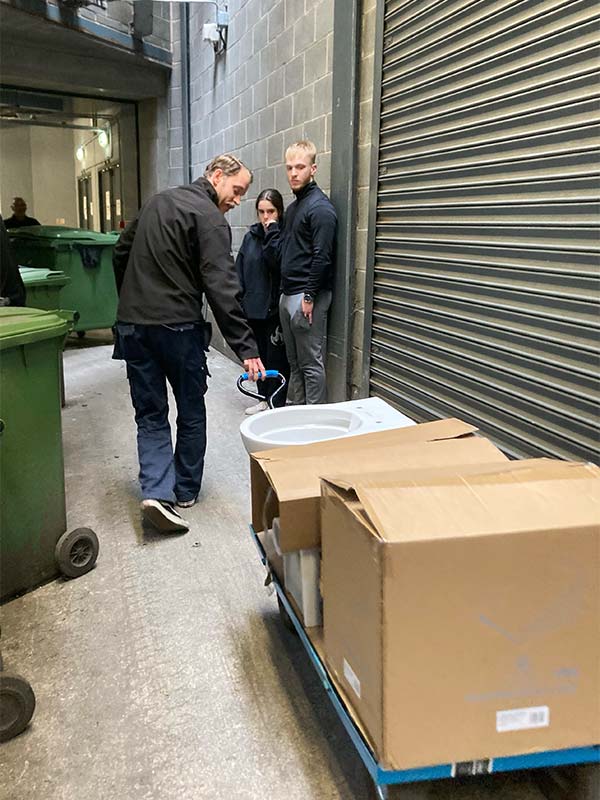
Angela suggested that the motorised trolley (shown at the side) should have a longer handle to prevent lateral bending, which could lead to unnecessary strain on the lower back.