Ports of Jersey / Jersey Airport – Zoom Training
Case Study Overview
Training Course Delivered
Industry sector
Location
Training Carried Out

Case Study Details
In April 2026, two employees from Ports of Jersey attended the IOSH Approved People Moving and Handling Train the Trainer course via Zoom with Fit4Work Director and Senior Physiotherapist, Angela Hinton.
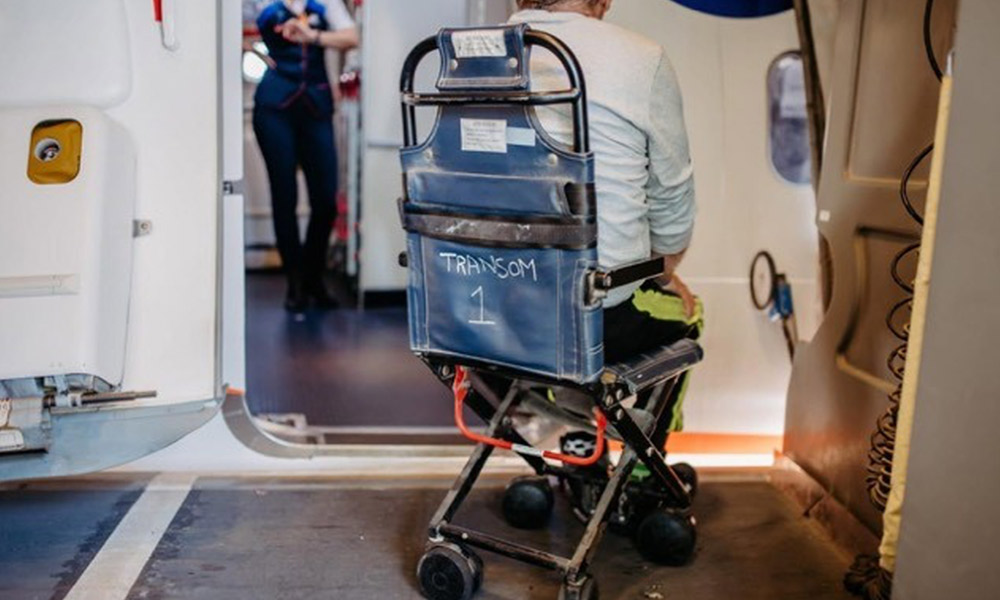
Their aim was to gain the appropriate knowledge and certification to safely train airport staff to assist passengers with reduced mobility when transferring from a wheelchair into an aircraft aisle chair and then onward into their allocated aircraft seat.
This type of transfer presents unique manual handling challenges due to restricted cabin space, narrow aisles, fixed seating, and varying passenger mobility needs.
The Challenges of Aircraft Passenger Transfers
The equipment commonly used during these transfers includes:
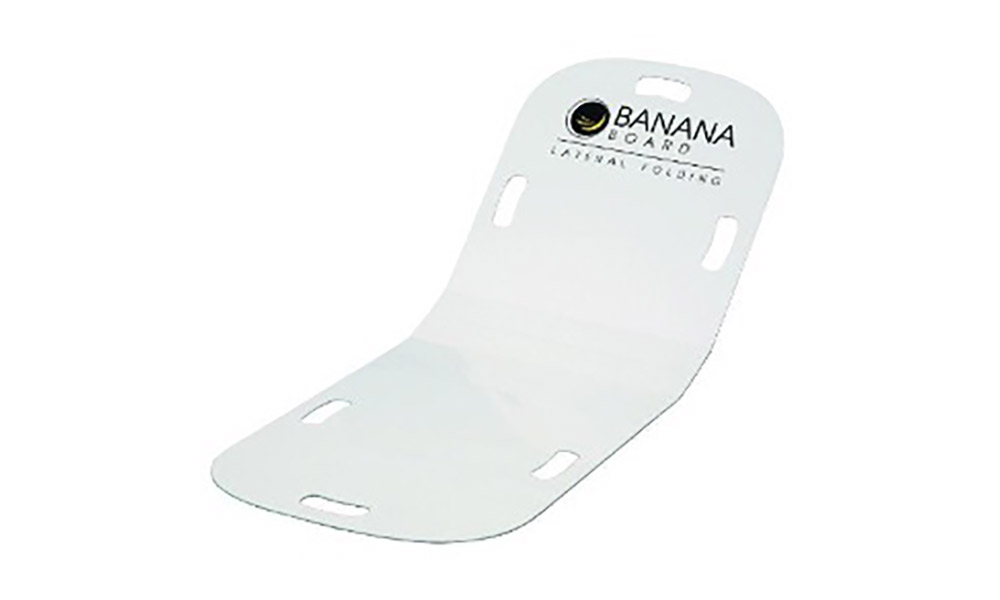
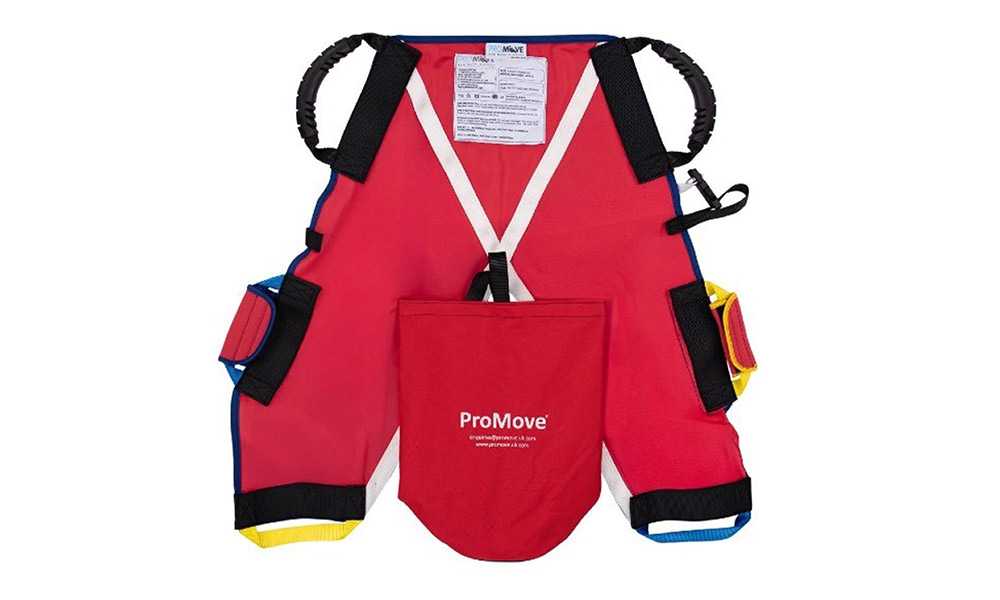
Both pieces of equipment have their place depending on:
A key factor explored during the course was aircraft seating design.
Where armrests can be raised, a banana board transfer may allow a safer lateral movement from the aisle chair across to the aircraft seat.
However, when armrests are fixed, the transfer becomes significantly more difficult.
Handlers may then need to lift the passenger over the armrest, substantially increasing the risk of manual handling for both the passenger and the staff involved.
Additional Challenges at Jersey Airport
As a smaller airport with a shorter runway, Ports of Jersey does not typically accommodate larger aircraft.
This means smaller planes are commonly used, which can create additional moving and handling difficulties due to:
These environmental constraints increase the importance of:
Key Considerations Before Any Passenger Transfer
During the course, Angela emphasised that every transfer must be dynamically risk assessed before proceeding.
Important considerations include:
If the aisle seat armrest can be raised, a lateral banana board transfer may be possible.
If the armrest is fixed, the transfer may require:
The Reality of Working Inside Aircraft Cabins
While practical training sessions can simulate many scenarios, the reality of transferring passengers within an aircraft cabin presents additional challenges.
These include:
When lateral movement is not possible, handlers may resort to lifting techniques involving reaching, twisting, and working at awkward heights - all of which significantly increase biomechanical strain on the spine and upper limbs.
A Practical Solution Introduced During Training
Drawing upon her extensive physiotherapy and moving and handling background, Angela introduced an alternative approach during the course using slide sheets.
Rather than manually lifting the passenger from the aisle chair across two aircraft seats, the trainees were shown how to create a low-friction transfer surface.
The technique involved:
Where suitable and following risk assessment, an additional slide sheet could also be positioned over the banana board itself to further reduce friction.
This effectively transformed the task from a manual lift into a controlled lateral movement.
Why This Technique Matters
The trainees found this approach particularly valuable because it demonstrated how adapting equipment creatively - while remaining within safe handling principles - can significantly improve outcomes in difficult environments.
Potential benefits include:
Most importantly, it supports one of the key principles of safer moving and handling:
Avoid unnecessary lifting whenever reasonably practicable.
Applying Efficient Movement Principles
Throughout the course, Angela reinforced the importance of efficient movement principles, including:
The slide sheet technique aligned closely with these principles and demonstrated how safer systems of work can often be achieved through thoughtful adaptation rather than increased physical effort.
Final Thoughts
Although the trainees reported feeling confident performing the transfer within the training environment, Angela emphasised that confidence alone does not eliminate risk.
Aircraft passenger transfers remain highly complex and unpredictable.
Staff must therefore be trained not only in transfer techniques, but also in the ability to:
Ultimately, safer passenger handling is not about completing the transfer at all costs - it is about completing it safely, with minimal risk to both the passenger and the handlers.
Fit4Work - Supporting Safer Moving and Handling
Fit4Work delivers IOSH-approved People Moving and Handling Train-the-Trainer courses designed to equip professionals with the knowledge, practical skills, and confidence to deliver high-quality moving and handling training within their own organisations.
Courses combine practical handling skills, anatomy and physiology, risk assessment principles, efficient movement techniques, and real-world problem-solving to support safer practice across a wide range of sectors.