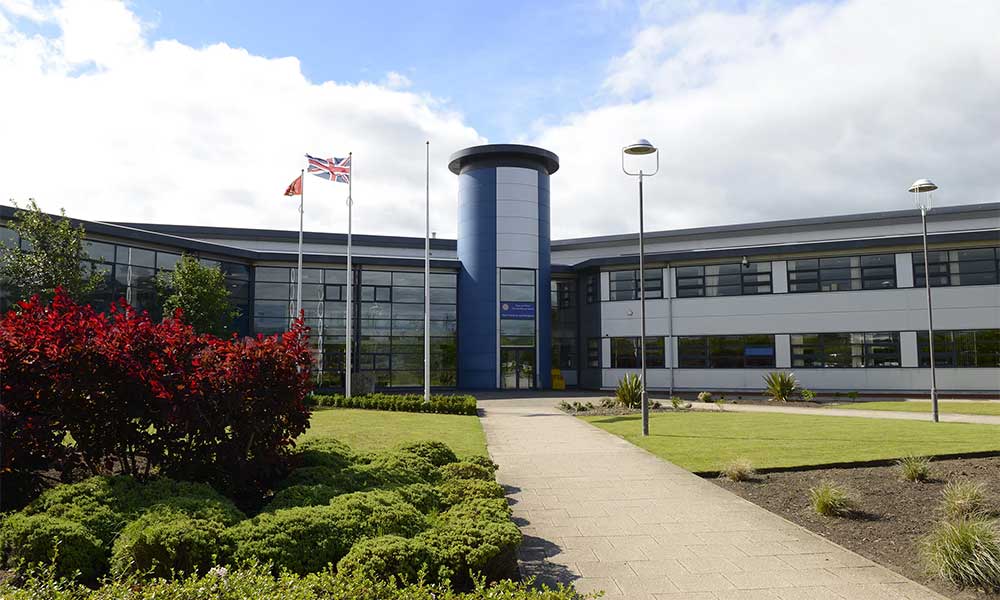
Tyne and Wear Fire and Rescue Service HQ
Case Study Overview
Training Course Delivered
Industry sector
Location
Training Carried Out
Case Study Details
It had been a while since Fit4Work last delivered their IOSH Approved DSE Assessor Training Course to Tyne and Wear Fire and Rescue Service.
Three officers from the Health and Safety Department attended the face-to-face course. This course covered in-depth topics that only the NEBOSH General Certificate and IOSH touch upon. It is designed to enhance the assessors' skills and instill confidence in their ability to carry out a comprehensive workstation risk assessment.
The key areas covered in the course are documented below. Models of the spine and shoulder joints were also used to address delegates who learn best through seeing rather than through listening and reading. They ensure that assessors acquire the necessary skills to conduct a comprehensive workstation risk assessment, addressing various musculoskeletal issues, including Carpal Tunnel Syndrome, Tennis Elbow, De Quervain's tendonitis, disc prolapse, and Symphysis Pubis Syndrome, possibly caused by pregnancy.
The course covered the key areas listed below that are essential for assessors to perform their duties correctly and efficiently. For instance:
One of the key areas this course addressed was the practicality of chairs for office staff and employees working 12-hour shifts in the control room. This is particularly crucial, as employees in these environments often spend long hours seated, potentially leading to health issues. Angela, a Chartered Physiotherapist and Director of Fit4Work, trains delegates on determining which chair is best suited for specific issues, making the course content directly applicable to their daily work routines.
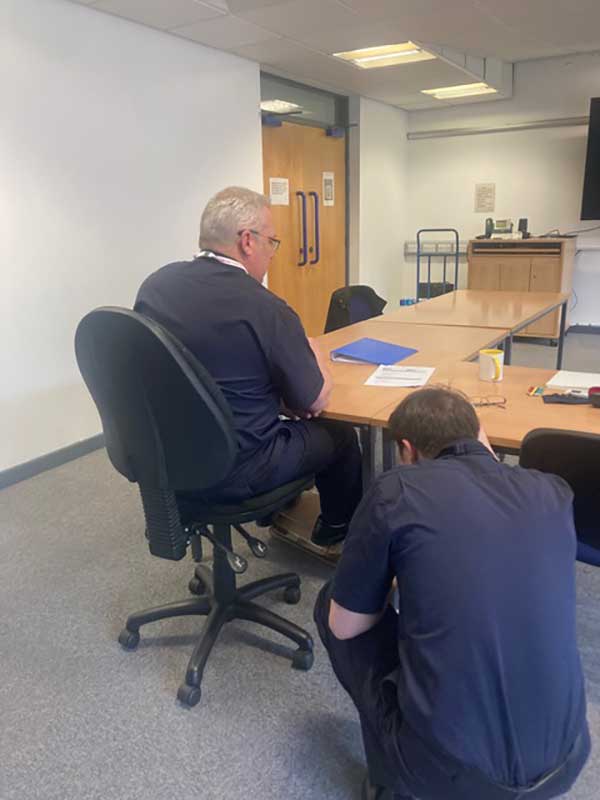
The above photo illustrates the importance of carefully assessing the suitability of the chair that an employee is using. For instance, one must ensure that the seat pan is the correct length and width. You should be able to fit two fingers between the back of the knee and the front of the chair. Is the seat pan also wide enough to adequately support the employee's pelvis and thighs? There should be two inches on either side of the pelvis, and the thighs should be measured at two fingers’ width on either side of the pelvis; otherwise, they are not considered wide enough. The chair's backrest must be moved forward sufficiently to support the user's correct sitting posture (the assessor will have demonstrated how to adopt this before the backrest is adjusted). Additionally, is the backrest high enough? Does the lumbar support in the chair align with the user's waist?
Angela visited the control centre at the Tyne and Wear Fire and Rescue Service headquarters, where she conducted a hands-on session with her trainees. During this session, she identified issues and recommended adjustments to improve their comfort, demonstrating the practical nature of the training.
The course comprises two end-of-course assessment papers, each requiring a sixty per cent pass mark.