The Lying-Down Workstation: Future Innovation or Specialist Solution?
Posted on 11 March 2026
Introduction
The idea of working while lying down or fully reclined might sound extreme – but it’s already being explored in ergonomic design, rehabilitation, and tech-led workplaces.
As work becomes more flexible and personalised, the question is no longer “Is this normal?”
It’s “Is this appropriate for some people, some tasks, some of the time?”
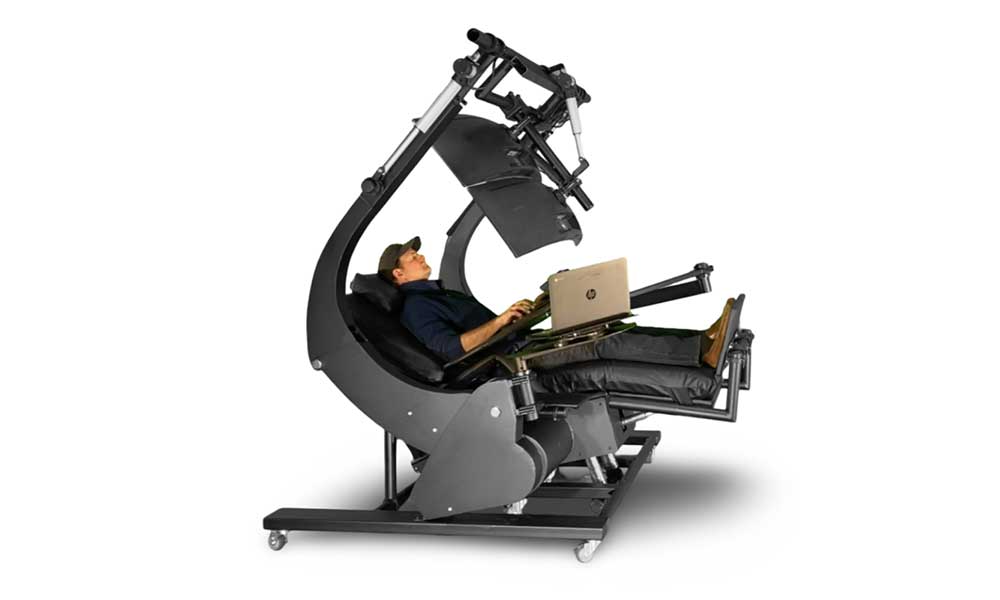
What is a lying-down workstation?
A lying-down (or near-supine) workstation typically includes:
The aim is to reduce spinal loading, muscular effort, and fatigue.
Where this already makes sense
Lying-down workstations are already used (or trialled) in:
Rehabilitation and clinical settings
Here, reduced spinal compression and muscle activation can be clinically beneficial.
Consideration for reasonable adjustments
For some workers, a reclined setup could be a reasonable adjustment, for example:
This is where DSE, equality legislation, and clinical judgement intersect.
High-focus, low-movement tasks
Tasks such as:
can sometimes be performed effectively in reclined postures – for limited durations.
Potential benefits (when used appropriately)
This challenges the long-held assumption that “upright sitting is always best.”
The real risks (and why this must be managed)
A lying-down workstation is not risk-free.
Potential issues include:
This is not a universal solution and should never be a default setup.
Why current DSE thinking struggles with this
Traditional DSE guidance assumes:
A reclined workstation challenges:
This is where competent assessor judgement matters far more than checklists.
The future role of lying-down workstations
Looking ahead, lying-down workstations are likely to be:
They will sit alongside:
Not replace them.
Key message for employers
The future of DSE is choice and adaptability, not enforcing one posture.
A lying-down workstation may be:
But only when supported by:
Final thought
The future of work isn’t sitting, standing or lying.
It’s designing environments that allow humans to move between all three – safely, comfortably and productively.
If you’re looking for expert advice on workspace assessments, check out our services for DSE Assessments.
Tagged as: