Headrests on Office Chairs: Do We Really Need Them? (A Myth-Busting Guide)
Posted on 15 May 2026

Introduction
Headrests are often marketed as an essential ergonomic feature -but when we look at how the body actually works, the story is very different.
As a physiotherapist, my view is simple:
The head and neck are designed to move – not to be held still against a support.
The Body Is Designed for Movement
The cervical spine (your neck) is built for:
Your neck muscles are designed to:
When we reduce that movement – by leaning into a headrest for prolonged periods – we risk:
A Clinical Shift: Movement Over Immobilisation
There’s a reason why clinical practice has changed.
In settings like Accident and Emergency departments, soft collars for minor whiplash injuries are no longer routinely recommended.
Why?
Because:
This principle applies just as much to workplace posture as it does to injury management.
So… Do We Need Headrests?
For most desk-based work:
No, we don’t.
When sitting upright:
A headrest in this position:
When Headrests Do Have a Role
This isn’t about removing headrests completely – it’s about using them appropriately.
Reclined Postures
When the chair is tilted backwards:
Passive Tasks
Such as:
Recovery & Micro-Breaks
The Often-Missed Detail: The Whole Body Matters
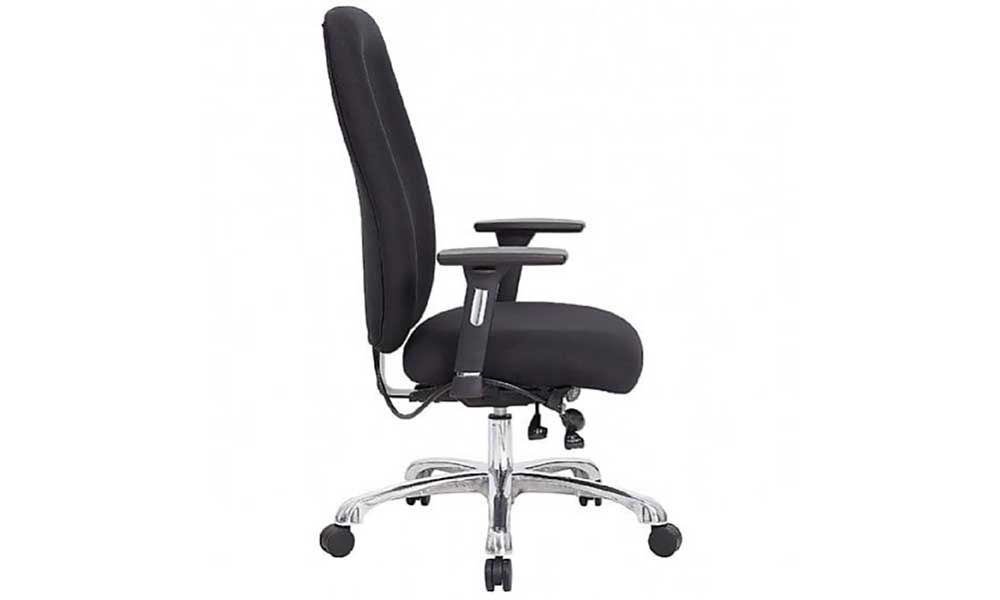
If a user reclines:
So we need to think beyond just the head.
Key considerations:
Reclining without proper support can create more strain – not less
The Real Issue Isn’t Head Support
Most neck pain at work isn’t caused by a lack of a headrest.
It’s caused by:
A headrest doesn’t fix these – it can sometimes mask them.
Practical Takeaway
Final Thought
Headrests are not an ergonomic necessity – they are a situational tool.
If we rely on them during active work, we are moving away from how the body is designed to function.
If you’d like an expert opinion on the way your office chairs and workstations are setup, please don’t hesitate to reach out and contact Fit4Work.
Tagged as: